
Four signals, one story: what 2026’s data trail means for Speckle Park breeders
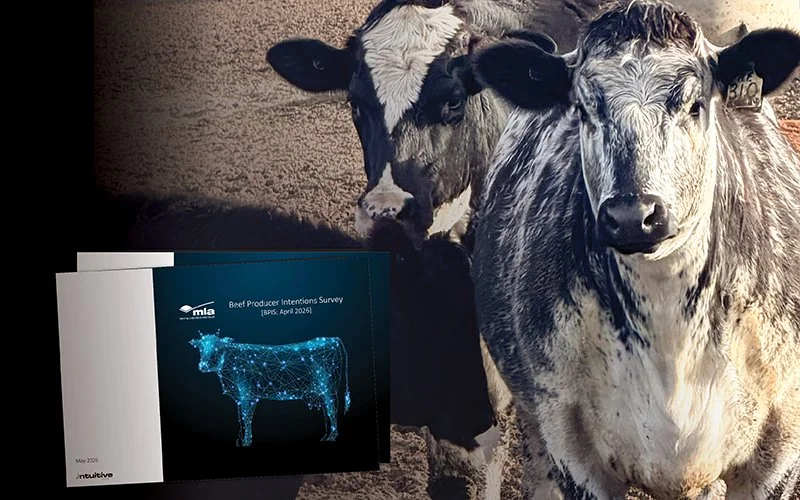
Four pieces of information landed at different points this year and none were written with the others in mind. MLA's April 2026 Beef Producer Intentions Survey, published in May, gives the freshest read on producer sentiment and herd intentions. Episode 3 broke down the breed-level detail behind it soon after. Simon Quilty addressed SpeckFest 2026 with a briefing on the US market. And Beef Central published fresh export trade figures yesterday. Individually, each is a snapshot. Read in order, they trace a single line through the year, and it is one worth following closely.
May: producers are still positive, but more cautious
MLA's April 2026 Beef Producer Intentions Survey, published in May, shows producers remain broadly optimistic, but the mood has cooled since the January-released November report. Nett sentiment now sits at +53, with 61% of producers positive and 8% negative. The national on-farm grassfed adult beef cattle herd is estimated at 29.66 million head, including 14.77 million breeding cows and 5.70 million heifers. Producer intentions have also shifted: 26% intend to increase herd size, 54% plan to hold steady and 21% intend to reduce.
That detail matters because the story has moved from simple expansion to disciplined decision-making. A steady herd with more heifers on hand still puts the spotlight on the bull. Producers retaining females are thinking hard about what those heifers are joined to, and traits like calving ease, fertility and maternal ability become the deciding factors in how well that strategy pays off. MLA's April report also shows that first-half 2026 sales were stronger than producers expected as reported in the November 2025 survey, with dry conditions in northern NSW and southern Queensland pushing saleyard numbers higher and adding a sharper seasonal edge to the market.
Full report: BPIS April 2026, MLA final report (PDF)
Summary: Majority of Australian cattle producers optimistic despite mixed conditions, MLA
The number worth sitting with
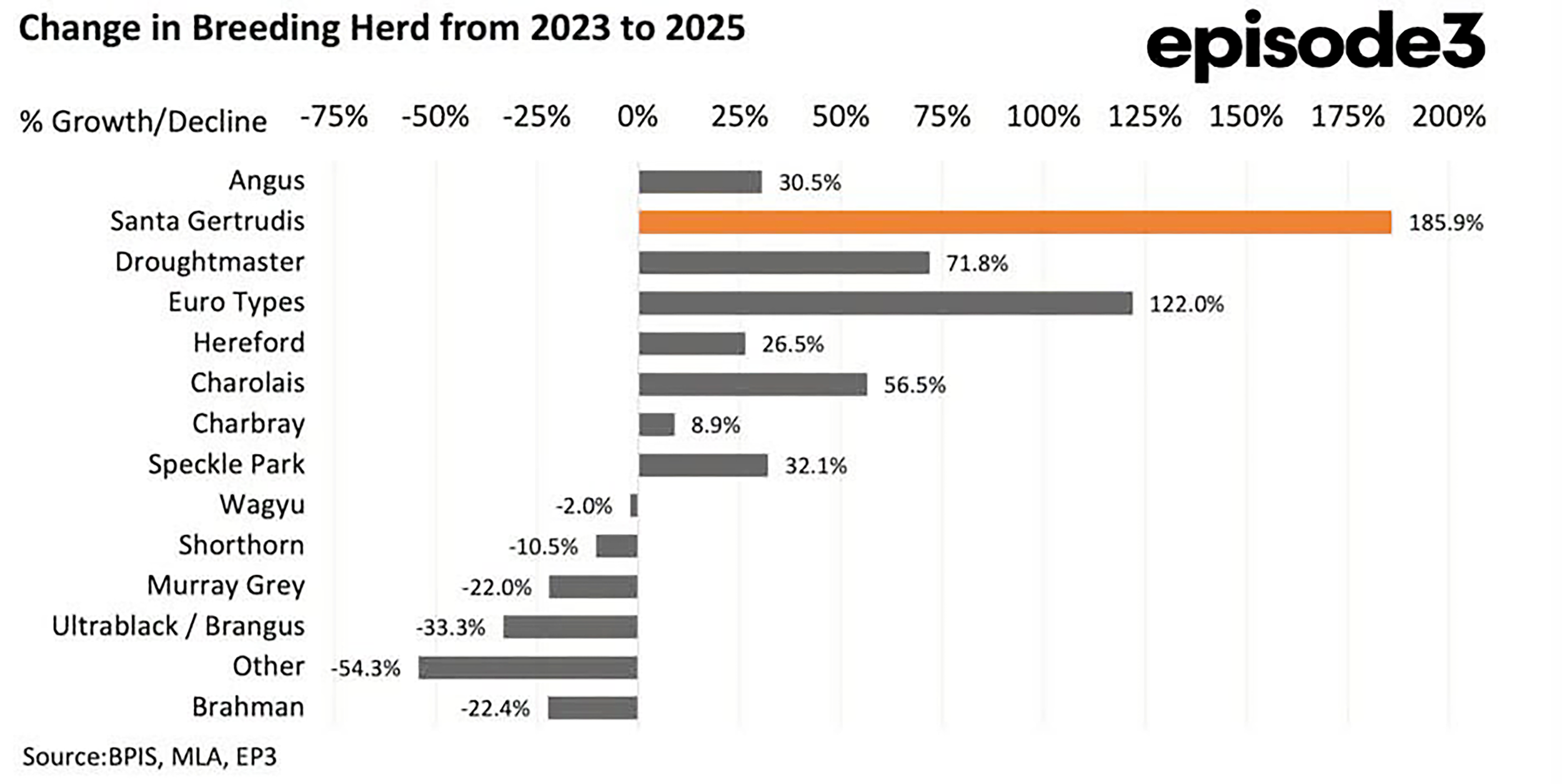
Separate Episode 3 analysis went further, breaking down MLA's breed-level data to see which cattle types actually grew their share of the national breeding herd between 2023 and 2025. Speckle Park recorded growth of 32.1%, ahead of Angus at 30.5%, the breed that still holds the largest share of the national breeding herd by a wide margin.
For a breed still small in absolute numbers, growing faster than Angus over a two-year period is a genuinely strong result and one worth having in hand for any conversation with a producer weighing up where to invest next.
SpeckFest 2026: a briefing on the American herd
Analyst Simon Quilty spoke at SpeckFest 2026, hosted by Dale and Belinda Humphries of Wattlegrove Cattle Company, on the state of the US beef market, the single biggest driver of global beef prices. His briefing centred on a US herd near historic lows following several years of liquidation, with strong and growing consumer demand for beef at the retail level, particularly in premium categories such as organic and grass-fed product.
It is a market shaped by scarcity on one side and genuine appetite on the other, a combination that has flowed through into the strength of global beef prices this year.
June: the tariff story shows up in the numbers
Beef Central's export analysis, published on July 2 and drawing on Department of Agriculture, Fisheries and Forestry trade statistics, gave the clearest look yet at how the market has responded to the China tariff, both MLA and Quilty had flagged as a factor to watch. Australia reached its 205,000 tonne China quota on June 18, triggering a 55% tariff on further shipments for the rest of the year. China's export volume fell sharply as a result, from 27,760 tonnes in May to 7,814 tonnes in June.
Other markets moved to fill the gap almost immediately. US trade reached 49,200 tonnes in June, close to levels last seen in the 1970s. Korea posted a record 32,599 tonnes for the month, and Japan and Canada both recorded solid gains over the same period. Total Australian beef exports for the first half of 2026 reached 805,379 tonnes, up 103,000 tonnes on the same period last year.
Primary data: DAFF, Australian red meat export statistics
Analysis: Beef Central, June beef exports to China slump in wake of tariff, but other markets absorbing the slack
What it means for Speckle Park
Set side by side, these reports describe a breed moving in the right direction at a genuinely interesting point in the cycle. Producer confidence is no longer at the record high recorded in the November 2025 Beef Producer Intentions Survey report, but it remains firmly positive. More producers are now choosing to hold herd size rather than expand, which makes breeding decisions inside the existing herd even more important. In that context, Speckle Park's own growth rate within the national herd, ahead of Angus over the past two years, is a strong, verifiable story rather than a claim and one worth having on hand the next time someone asks why Speckle Park.
Context is still worth keeping close. The April survey was taken after sentiment had softened and as dry conditions, stronger first-half sales and China tariff risk were already shaping decision-making. Korea, like China, is approaching its own export quota, a development already underway as this story is published. A breed that trades well nationally benefits when the wider market is strong, so it is worth keeping an eye on how this plays out over the back half of the year.
The source reports and analysis are linked throughout this story and there is real value in reading them. Numbers like these warrant a closer look. However, every herd and business is different, so members weighing up their next move are encouraged to work through the details themselves or with their advisors and see what a breed with this kind of momentum could mean for their plans in 2026 and beyond.
